As I’m sure is the case for many people recently, more and more of my conversations are ending up being about AI. That is, if they’re not about the war in Iran and the price of petrol.
Most of the time the AI conversation is about how people are using it in their workplaces and how they’re seeing their workplaces change because of it. Sometimes it’s about a news story detailing the capabilities of a new model that’s been released, or the hundreds of billions of dollars being invested into it, or the ethical boundaries (or lack thereof) being drawn by the major companies, or senior personnel resigning due to this lack of boundaries, or some tone-deaf thing Sam Altman said.
Sometimes, though, it gets a bit more interesting and delves into where we see this all heading in 5 years, 10 years, 100 years, and what form of AI usage we think actually enriches the human experience.
Because what is good for the companies developing this technology, is not necessarily good for the people using it.
There are obvious incentives for companies to encourage, or demand in many cases, that their employees use AI to ‘help’ them do their jobs, and there are obvious incentives for OpenAI, Google, Anthropic and others to encourage the general public to use their products as frequently and as deeply as possible. And like any new product that makes our lives easier, we generally adopt it with open arms.
But AI, as we know, isn’t like any other new product. It has the ability to replace that most human of qualities, the thing that has been our key evolutionary weapon and our way of deriving joy and meaning from the world around us. And that is our ability to think.
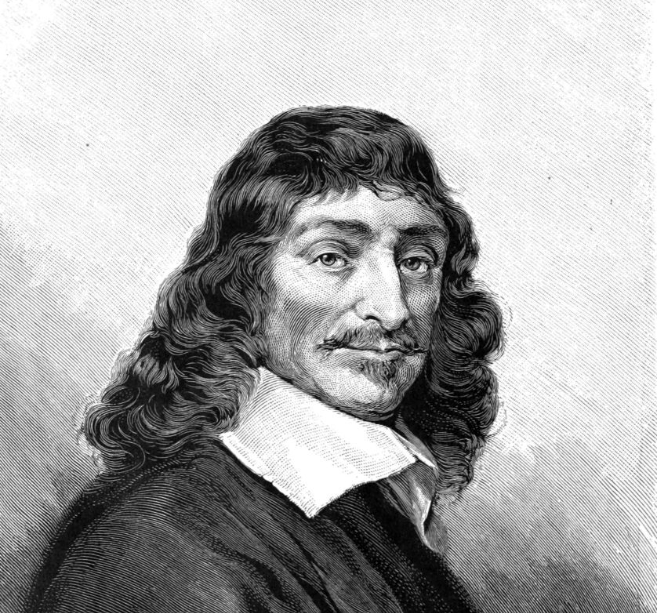
René Descartes noted in Discourse on the Method in 1637 that:
…while I was trying in this way to think everything to be false, it had to be the case that I, who was thinking this, was something. And observing that this truth – I am thinking, therefore I exist – was so firm and sure that not even the most extravagant suppositions of the sceptics could shake it.
…whereas if I had merely stopped thinking altogether, even if everything else I had ever imagined had been true, I would have had no reason to believe that I existed. This taught me that I was a substance whose whole essence or nature is simply to think.
To take the converse of Descartes’ observation, my contention is that – if we don’t think, we are not. Or in other words, if we allow AI to do all of our thinking for us, we cease to exist as humans.
I should note at this point that I’m not ‘anti-AI’. I am ‘pro-human’. And I think this distinction significantly changes how we should view the issue.
The end goal, I believe, of any society should be to improve the quality of the lives of its members. And when new technologies are developed, this is the first question we need to ask ourselves – “How does this improve our quality of life?” Because it is absolutely not a given that all new technologies improve the quality of our lives. The most contemporary example of this being the last 20 years of social media steadily consuming more and more of our attention, and fuelling a steep rise in mental health issues in young people.
There are undoubtedly many cases where AI can improve our quality of life. I would say these broadly fall into two categories: low-level thinking and high-level thinking.
Low-level thinking is barely thinking at all, at least not consciously. An example of this in a work context might be data entry or other repetitive tasks. These are things that don’t add to our capacity for complex thought and reasoning.
High-level thinking, as I’m defining it, are those things that are simply beyond the realms of human intelligence. AI has the ability to find connections between billions of disparate data points and draw conclusions and solutions at a speed that no human brain can. Medical research is a key example of this where humans stand to benefit greatly.
Where I think AI is particularly dangerous to our quality of life is in the middle ground. It’s the mass of mid-level thinking that we outsource to AI that gradually destroys our mental capacity.
Mid-level thinking requires some effort, and we now have a tool available to us that can remove the need to make this effort. But we must think about what not making the effort costs us. Our brain is just like the rest of our body, in that if we don’t use it, we lose it. Outsourcing our thinking to AI is the equivalent of sitting on the couch watching Netflix, instead of exercising. It’s a tempting, comfortable thing to do in the short-term, but if we compound this behaviour day after day, our bodies and our minds become weak.
If we were to take a maximalist view and draw this line towards its conclusion, I picture a society not dissimilar to that of the “fitless humans” in WALL-E. A society where we have given in so completely to the constant drive for comfort that our bodies have lost the ability to move and our minds have lost the ability to think.
It is a problem of short-term comfort vs. long-term quality of life. And when the incentives for the companies so clearly point in one direction, it becomes a personal decision whether we drift along with that current, or whether we value our own minds.
As mentioned in my previous post, Al Gore’s An Inconvenient Truth was a “sit up and listen” moment for not only myself, but for the global community. It took the viewer on a journey from a place of assumed ignorance, to conceptual understanding. A lot has changed in the 14 years since then, of course, but the core scientific insights remain. I believe it’s the perfect place to start in building one’s climate change knowledge from the ground up.
In 1958, Roger Revelle proposed that we measure carbon dioxide concentrations in the Earth’s atmosphere. He was the first person to propose such an idea, and brought Charles Keeling aboard to work with him. They started out by sending up weather balloons in the middle of the Pacific Ocean, as it was a highly remote area and wouldn’t be affected by local CO₂ concentrations in populated areas.
‘The Keeling Curve’, Scripps Institution of Oceanography
The resulting graph, dubbed ‘The Keeling Curve’ (shown above) is where everything seemed to start. Measuring concentrations year on year gave us hard data that CO₂ levels were steadily increasing, and allowed us to draw a line forwards to see where we’re headed without a concerted change. It also gave us the wonderful ‘sawtooth’ effect, which is a graphical representation of the Earth ‘breathing’ in and out, once per year. This is due to the seasonal changes in northern hemisphere forests. In Autumn, the trees lose their leaves and release CO₂ into the atmosphere – while in Spring, they regain their leaves and absorb CO₂. I was enthralled when I first saw this graph, it really shows the Earth as a living, breathing organism – Gaia, as James Lovelock would say¹.
Taking a step back from this, in the spirit of building knowledge from the ground up – it would be worthwhile to include the basic idea of how global warming occurs, as I understand it currently. The atmosphere surrounding the Earth is made up of mainly nitrogen (78%), oxygen (20.9%) and argon (0.9%). The remaining 0.2% of atmosphere is made up of ‘trace gases’, such as carbon dioxide, methane, helium, hydrogen, etc. Carbon dioxide, methane and water vapour are what we refer to as ‘greenhouse gases’, and even though they’re relatively uncommon in the atmosphere, they have a huge role to play in the Earth’s temperature regulation.
For most of human history, the average global temperature has been about 14 degrees celsius, and this has been held constant by a constant concentration of greenhouse gases. In recent times however, as carbon emissions have increased, it has in effect made the atmosphere “thicker” and resulted in the trapping of sunlight that would have usually been reflected back out into space. As our blanket of greenhouse gases gets thicker and thicker, more sunlight (and hence more heat) is trapped by the Earth’s atmosphere, and global temperatures increase.
650,000 Years of CO₂ and Temperature, An Inconvenient Truth (2006)
The iconic image above (sadly missing Mr. Gore on a scissor lift) serves as a visceral reminder of the unprecedented nature of our current CO₂ levels, let alone what future CO₂ levels could be. In 2008, after An Inconvenient Truth was released, an ice core drilled at EPICA Dome C in Antarctica was analysed by Lüthi et al and increased this timeline of carbon concentrations all the way back to 800,000 years before the present day.² Throughout this time period, the ten hottest years on record have all been recorded within the past 15 years.
Not only does climate change cause more drought, but paradoxically is also causes more floods. Precipitation levels increase and are relocated, so that wet areas will often become wetter and dry areas can become dryer.
I liked the way Mr. Gore described the Arctic and Antarctica as two “canaries in a coal mine”. I had to do a quick Google to find the origin of this term (apparently canaries would drop dead from high levels of methane or carbon monoxide, before it reached a level that’s harmful to humans), but essentially the ‘canary’ is a leading indicator of a certain problem.
In this case, the poles are ‘canaries’ because they experience the effects of global warming earlier, and more severely, than the rest of the Earth. The thickness of the Arctic ice cap, for example, has reduced by 40% in the past 40 years.
The poles currently act as giant mirrors that reflect a large amount of sunlight (about 90% of the rays they come into contact with) back into space. Water, on the other hand, absorbs a little over 90% of the sunlight it comes into contact with. So as the ice caps melt, they turn to water which absorbs sunlight, and accelerates the melting of the surrounding ice – creating a ‘runaway effect’. This means that as time goes on, the rate of melting in the poles will increase exponentially.
A split in The Ward Hunt Ice Shelf, An Inconvenient Truth (2006)
The Ward Hunt Ice Shelf in the Arctic was mentioned in An Inconvenient Truth – it had cracked in half in 2002 (as shown above). Since then, a further 8km² calved (broke) off in 2008, and then another 50km² in 2010. Along these same ‘canary in the coal mine’ lines, Mr. Gore mentioned that an average global temperature increase of 2.8 degrees celsius, would in fact result in only a 0.55 degree increase at the equator, but would cause a 6.67 degree increase at the poles.
One of the most astonishing points made in the film, was the effect climate change would have on the ‘Global Ocean Conveyor’, i.e. the Earth’s ocean currents. As the Arctic ice cap and Greenland melt, the northern Atlantic waters become fresher, and therefore less heavy (as there’s a lower concentration of salt). This would slow down and eventually stop the ‘Global Ocean Conveyor’ (shown in the below image). The counterintuitive part is that this would result in a significant cooling of Europe (estimates range between 5-10 degrees celsius), as the warm equatorial waters would no longer be brought north by the ocean’s currents and blown across Western Europe by the prevailing winds.
‘The Global Ocean Conveyor’, An Inconvenient Truth (2006)
Related to the discussion of the ice caps melting, is the distinction between sea-based and land-based ice. The distinction is the same as having an ice cube in a glass of water, or a stack of ice cubes that protrude above the top of the glass. The ice that protrudes above the glass (i.e. land-based ice), adds volume to the water when it melts and results in the glass overflowing (or the sea rising).
Mr. Gore stated that if either the west Antarctic ice sheet or Greenland were to melt completely, they would raise global sea levels by 6 metres, each. This would cause massive disruption to the hundreds of millions of people who live in low-lying areas such as Shanghai, San Francisco and Kolkata.
All of these climatic changes have other, less obvious effects. A large number of such effects were listed in the film, including:
Increasing mosquito problem in cities such as Nairobi and Harare – due to it becoming warmer at higher altitudes
Migratory birds in the Netherlands – new caterpillars and hatching of chicks used to occur at the same time. But the warming climate has caused the caterpillars to hatch earlier, which means the chicks miss out on life-sustaining food
Decreasing frosts in southern Switzerland, resulting in invasive exotic species coming in to fill the void
Pine beetles in the USA used to be killed by the frosts, but they are now destroying millions of acres of trees due decreasing frequency of frosts
Coral bleaching
Species loss is now occurring at a rate 1000x faster than the natural background rate
A particularly relevant knock-on effect (based on what the world is going through at the moment) is the increase of infectious disease transmission. Habitat loss is bringing animals into greater contact with each other (and with humans), which means there are increased odds of viruses, such as COVID-19, becoming enormous problems for the global community.
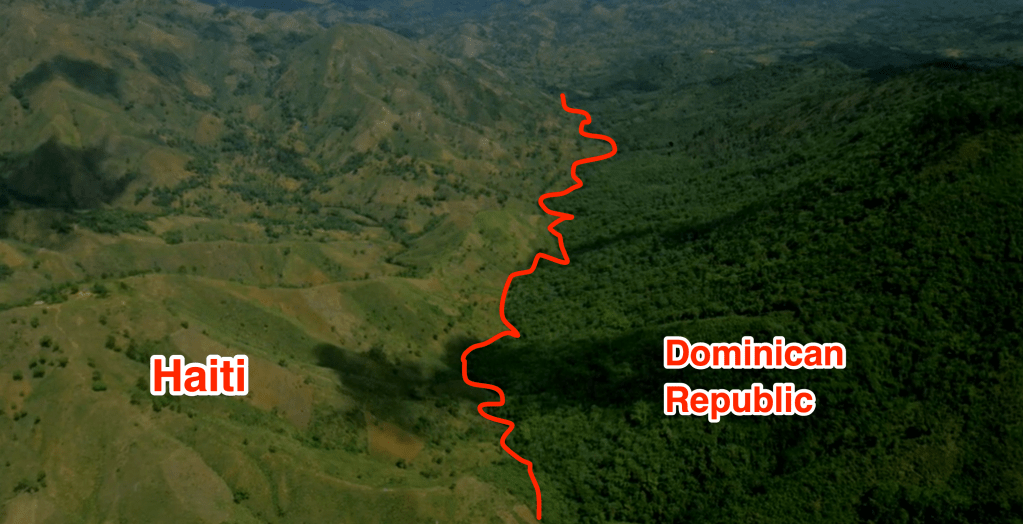
One reason for the increased habitat loss, is the rapidly increasing global population. In 1945, the global population was 2.3 billion, right now it sits at 7.8 billion and by the end of this century it is predicted to reach 11.2 billion. This means massively increasing pressure on food, water and natural resource supplies. Mr. Gore is convinced that habitat loss is largely a policy problem, and gave the example of the Haiti, Dominican Republic border (shown below with a few of my own scribbles). Habitat loss not only has an impact on flora and fauna, it is also a leading cause of global CO₂ emissions – about 30% of annual emissions are due to the burning of forests.
Border between Haiti and The Dominican Republic
Unsurprisingly, it is the world’s two largest economies (USA and China), that have the highest overall CO₂ emissions. However, on a per capita basis Australia is actually ahead of the US with 16.9 tonnes per capita, vs 16.24 tonnes per capita.³ There is often an argument in Australia of “why should we do anything, we account for 1.3% of global emissions, even if we change it’s not going to do much anyway.”
The per capita problem is one clear rebuttal to that question, and in fact if we included all of our coal exports into the calculations – we would actually account for 4% of global emissions, making us the 6th largest contributor to climate change. But the bigger reason, in my opinion, relates to our role as a global leader as one of the world’s top 20 economies. Why should we expect less developed nations such as China and India to do anything about it, when we’re in a much better position to do so, and still aren’t doing anything?
An Inconvenient Truth starts to wrap things up with an animation of a frog in a pot of boiling water. The point made here is that sometimes we need a sudden jolt to spur us into action, as we’ve seen recently with the coronavirus crisis. If there is only a gradual change, we will most likely sit there, not responding (like the frog), and only realise the trouble we’re in after it’s already too late.
Stephen Pacala & Robert Socolow said in 2004:
“Humanity already possesses the fundamental scientific, technical, and industrial know-how to solve the carbon and climate problems.”⁴
This has been repeated throughout the past 14 years by politicians from all around the world, and change is occurring on many different levels. A recent report from the Australian Energy Market Operator has said that we have the “technical capacity to safely run a power grid in which 75% of the electricity comes from wind and solar”, and that point could be reached within the next 5 years “if we get the regulations right.”⁵
This brings us back to the comment Mr. Gore made at the final climax of An Inconvenient Truth:
“We have everything we need, except political will. But…political will is a renewable resource.”
References
Lovelock, J. and Lovelock, J.E., 2000. Gaia: A new look at life on earth. Oxford Paperbacks.
Jouzel, J., Masson-Delmotte, V., Cattani, O., Dreyfus, G., Falourd, S., Hoffmann, G., Minster, B., Nouet, J., Barnola, J.M., Chappellaz, J. and Fischer, H., 2007. Orbital and millennial Antarctic climate variability over the past 800,000 years. science, 317(5839), pp.793-796.
Pacala, S. and Socolow, R., 2004. Stabilization wedges: solving the climate problem for the next 50 years with current technologies. science, 305(5686), pp.968-972.
I remember seeing ‘An Inconvenient Truth‘ when it came out in 2006 – I was in my final year of primary school.
Probably in part due to my parent’s reactions to it, it left me feeling deeply unsettled. Towards the end of the film, a huge list of countries who had ratified the Kyoto Protocol was projected up onto the screen. Unfortunately, Al Gore had some bad news for Australians:
“There are only two advanced nations in the world that have not ratified Kyoto, and we [the USA] are one of them. The other, is Australia.”
Thanks to Kevin07, about a year later we joined that list. We were well past being fashionably late to the party, and probably verging on being irresponsibly late, truth be told – but at least we showed our face. “We’ll just come for one drink, it’d be rude not to.”
So why after all that heel-dragging are we still dragging our heels 14 years later?
Right now, I couldn’t tell you. There are a lot of places to get qualified opinions on the topic, and this isn’t yet one of them. What this blog is, is me starting from the start and educating myself as thoroughly as I can in the science, technology, infrastructure, policy and psychology surrounding anthropogenic climate change.
We all have a basic understanding of what the problem is (the world is getting too damn hot), and I would say that most of us even have some understanding of the foundational science. But I know that even as someone who has paid close attention to the environmental news cycle for the better part of 10 years, and has enough interest in the topic to spend their spare time learning about it, there are a multitude of gaps in my understanding.
I don’t expect many people to find this blog, but if you do, I hope you enjoy playing along at home. Please feel free to drop me a line with any recommendations on books, articles, documentaries or other resources you think might be helpful.
The most valuable learning experience is to talk with experts in the field, so if you in any way fit that description (and have a spare 10 minutes in the midst of COVID-19 lockdown), I would love to speak with you – just shoot me an email to jonte.shaw@gmail.com. You can also find my contact details on the ‘About’ page.